How to Calculate the True Cost of a Commercial Flat Roof
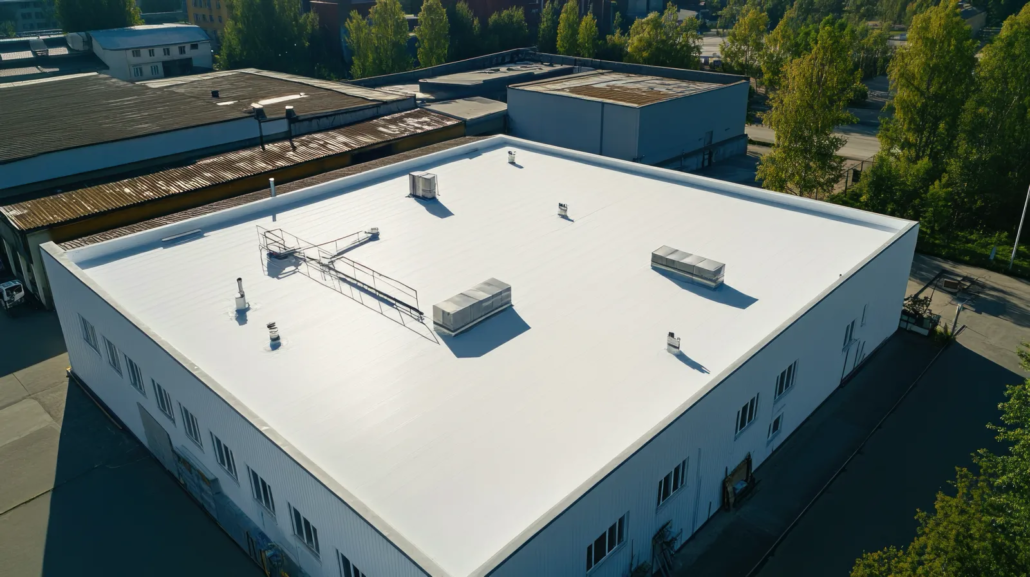
When managing a commercial property, the roof isn’t just a protective layer, it’s a long-term investment. Understanding the flat roof lifecycle cost is essential for property owners and facility managers planning for capital expenses and ongoing maintenance. Whether you’re dealing with leaks, aging materials, or energy efficiency concerns, the decision between repair, recover, or full replacement isn’t just technical—it’s financial.
Repair: Short-Term Relief, Limited Lifespan
Roof repairs can seem like the most cost-effective option in the moment. If your roof is still structurally sound and the damage is localized, patching the issue might be enough. But from a repair vs replace flat roof perspective, constant small repairs can add up over time. You’ll need to consider how many years the fix will realistically add to your roof’s life.
According to most industry estimates, repairs might extend a roof’s usability by a few years, but they rarely offer long-term savings. Using a roofing lifecycle cost calculator can help you quantify the ROI of repeat repairs compared to other options.
Recover: A Strategic Middle Ground
A commercial roof recover is the process of adding a new membrane over the existing one. It’s often seen as a cost-effective way to restore waterproofing performance without full replacement. The decision between commercial roof recover vs replace comes down to current roof condition, code compliance, and insulation integrity.
While recover projects can reduce labor and disposal costs, they may have shorter warranties and less insulation upgrade potential. From a flat roof capex vs opex standpoint, recovery can often be treated as a capital expenditure, especially when it extends the flat roof life expectancy cost efficiently.
Replacement: High Upfront, Long-Term Savings
Full replacement is the most expensive up front, but it also resets the lifecycle clock. If your roof has widespread issues, outdated materials, or has already been recovered once, replacement may be the only option.
A thorough flat roof replacement cost analysis should include tear-off costs, updated insulation, warranty benefits, energy efficiency gains, and extended lifespan. While costly, it often results in a better commercial roof total cost of ownership over the next 20–30 years.
Making the Right Decision
Every roof is different. That’s why assessing the roof restoration vs replacement cost is so important. Work with a trusted contractor to evaluate core samples, inspect underlying structures, and measure current performance. Decisions about repair, recover, or replace should be based on both current condition and financial impact.
Use tools like a roofing lifecycle cost calculator to break down scenarios. Long-term planning requires more than just budget numbers—it demands a full understanding of long term commercial roofing costs and performance trade-offs.
Final Thoughts
There’s no one-size-fits-all answer, but a well-informed decision can save tens of thousands over the roof’s life. Know your options, weigh the pros and cons of repair vs replace flat roof strategies, and plan for sustainability—not just savings.


