Commercial Roof Leak Diagnosis: Finding the True Source
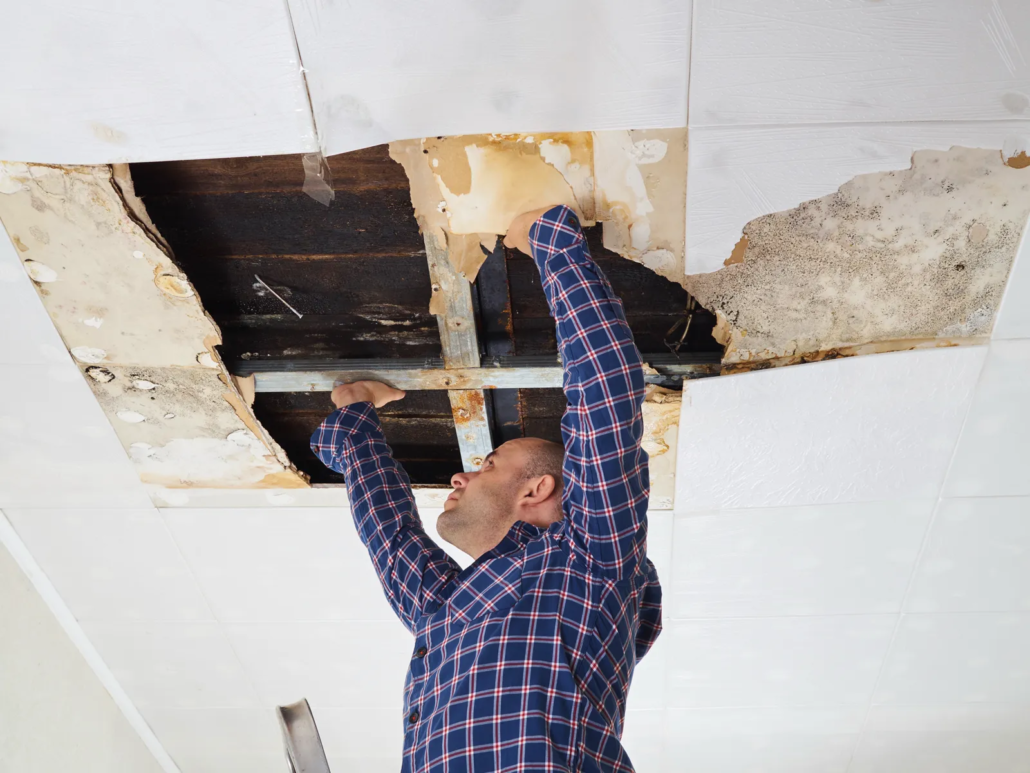
One of the most frustrating parts of managing a commercial building is chasing a leak that doesn’t seem to make sense. A ceiling stain shows up in one office, but the roof above it looks fine. A drip appears near a wall, yet there’s no visible puncture nearby. The truth is, with flat roofing systems, leaks rarely show up where they begin.
Understanding how water moves across a roof system is essential for accurate commercial roof leak diagnosis.
Water Doesn’t Stay Where It Enters
On flat roofs, water can travel significant distances before it becomes visible inside. The original flat roof leak source may be several feet away—or even across the building—from the interior damage.
This happens because of membrane roof water migration. Once water enters through a seam, flashing detail, or penetration, it doesn’t immediately drop straight down. It follows the path of least resistance, moving along insulation boards, vapor barriers, or steel decking.
That’s why you often see roof leaks far from damage. By the time the water shows itself, it has already traveled across structural components.
The Role of Insulation
Roof insulation plays a surprisingly large role in leak behavior. Wet insulation acts like a sponge, slowly releasing moisture into different areas over time. Through roof insulation water travel, a small breach can create a wide area of saturation beneath the membrane.
This makes concealed roof leaks commercial buildings particularly difficult to identify. What looks like a small problem on the surface may actually indicate widespread moisture trapped below.
Why Recurring Leaks Happen
One of the most common complaints from facility managers is a leak that “keeps coming back.” In many cases, the repair addressed the symptom, not the cause. Without identifying the true flat roof leak source, patching visible damage can leave the entry point untouched.
These recurring roof leak causes often stem from incomplete assessments or assumptions based solely on where the water appears inside.
Proper Inspection Matters
Accurate roof leak troubleshooting commercial properties requires more than a quick visual scan. A thorough flat roof leak inspection should include examining seams, flashing transitions, drains, penetrations, and parapet walls. Moisture mapping tools, infrared scans, and core samples are often necessary.
There are several advanced flat roof leak detection methods that professionals rely on today. Electronic leak detection can trace breaches in the membrane. Infrared thermography can identify wet insulation. Flood testing may isolate problem areas. Each method helps narrow down the true origin of the issue.
Why Diagnosis Comes Before Repair
It’s tempting to patch the visible problem and move on. But without understanding commercial roof leak diagnosis at a system level, repairs can become repetitive and costly. A disciplined approach saves time and money over the long run.
Final Thoughts
Flat roofs are complex systems, and water rarely behaves in predictable ways. From membrane roof water migration to roof insulation water travel, moisture can move far from the initial breach before appearing inside your building.
If you’re dealing with concealed roof leaks commercial properties often experience, focus first on identifying the real source. A comprehensive flat roof leak inspection combined with proper diagnostic tools will always outperform guesswork.


