Commercial Roof Coatings Explained: When Repairs Aren’t Enough
If you manage or own a commercial building, you’ve probably heard terms like “roof coating,” “roof cement,” and “roof sealant” used interchangeably. While they all play a role in maintaining a roofing system, they serve very different purposes. Choosing the wrong product can shorten the life of your roof or delay repairs that should have been handled differently.
Understanding the difference between roof coating versus roof cement can help you make better maintenance decisions and know when it’s time to bring in a professional.
Roof Cement Is a Repair Product
Think of roof cement as a localized repair material. It’s designed to seal small cracks, flashing details, or isolated leaks. Contractors commonly use it during roof repair projects to stop water intrusion around penetrations, flashing, or damaged seams.
However, roof cement isn’t meant to restore an entire roofing system. It works best for targeted repairs, not as a solution for widespread aging or weathering.
One common misconception is that applying roof cement across large sections of a roof will extend its life. In most cases, it simply masks the symptoms instead of solving the underlying problem.
Roof Coatings Protect the Entire Roof
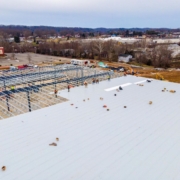
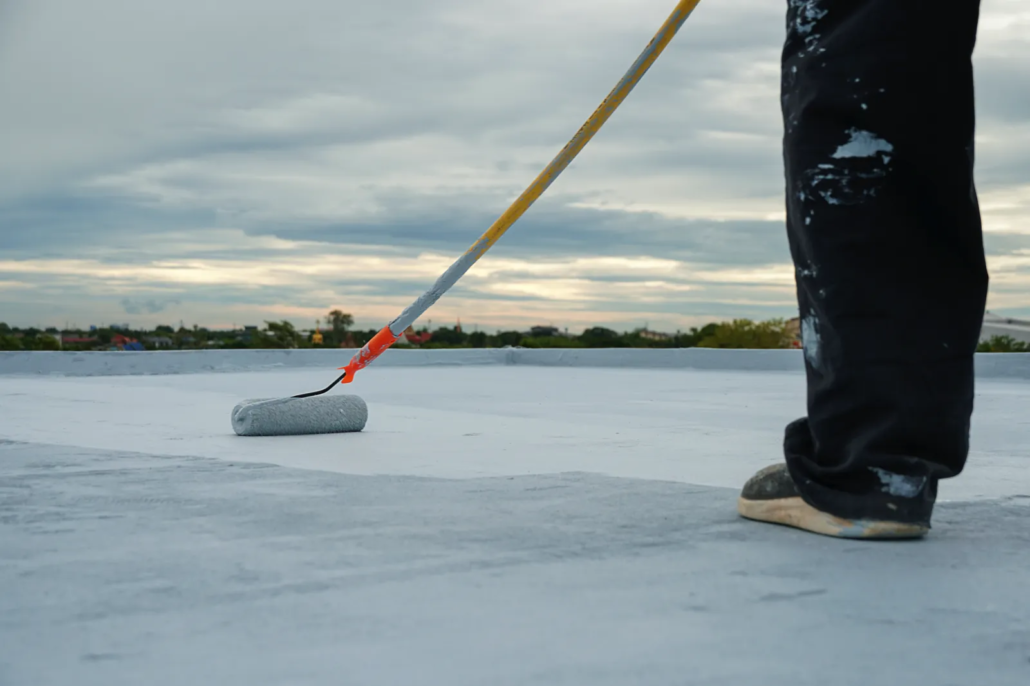
Unlike roof cement, commercial roof coatings are designed to cover the entire roofing surface. These coatings create a seamless protective layer that helps resist UV rays, weather exposure, and minor moisture intrusion.
Depending on the roofing system, coatings may also improve energy efficiency by reflecting sunlight and reducing rooftop temperatures.
For many aging flat roofs that are still structurally sound, a coating can extend service life without requiring a complete replacement.
Choosing the best roof coating for a flat roof depends on several factors, including the existing roofing membrane, climate, drainage conditions, and the overall condition of the roof. Acrylic, silicone, and polyurethane coatings each have strengths depending on the application.
Roof Cement vs. Roof Sealant
People often ask about roof cement versus roof sealant, but they aren’t the same product.
Roof cement is thicker and intended for repairing specific problem areas. Roof sealants are generally more flexible and are often used around penetrations, joints, and flashing where movement occurs.
Neither product should be viewed as a substitute for a professionally designed roof coating system when the entire roof is showing signs of wear.
When to Call an Expert
There are situations where a simple repair is appropriate, and others where it simply delays a much larger problem. Knowing when to use an expert can save significant money over the long term.
If your commercial roof has recurring leaks, widespread cracking, ponding water, or multiple repairs in the same areas, it’s time for a comprehensive inspection rather than another patch.
Experienced commercial roof coating companies can determine whether your roof qualifies for a restoration system or if replacement is the more cost-effective solution. They’ll evaluate moisture levels, membrane condition, drainage, and structural concerns before making recommendations.
Think Long-Term, Not Just Short-Term
The goal isn’t simply stopping today’s leak—it’s protecting the entire roofing system for years to come. A properly selected coating system can delay replacement, reduce maintenance costs, and improve the roof’s overall performance.
At the same time, using roof cement where it’s appropriate remains an important part of ongoing maintenance.
Final Thoughts
Understanding roof coating versus roof cement helps commercial property owners make smarter decisions about maintenance and repairs. While roof cement plays an important role in localized roof repair, commercial roof coatings are designed to protect the entire roofing system and extend its lifespan.
Before investing in repairs or restoration, consult experienced commercial roof coating companies. They can recommend the best roof coating for flat roof applications, or let you know if another solution makes more financial sense.