Flat Roof Drainage Problems: Causes and Prevention
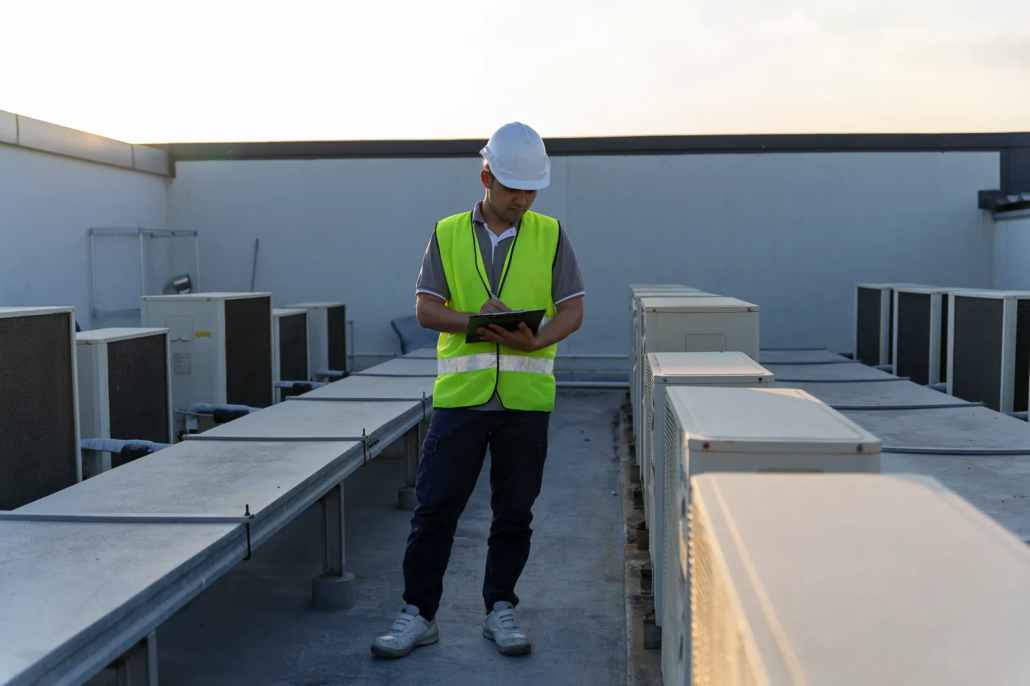
Commercial roofs are often described as “flat,” but in reality they are carefully engineered systems. Slope, drainage pathways, and rooftop equipment placement all influence how well the roof performs over time. When these elements work together, water moves off the roof efficiently and the structure stays protected. When they don’t, the result can be leaks, structural damage, and expensive repairs. Understanding the relationship between roof design elements is key to preventing long-term commercial roof drainage problems.
The Role of Roof Slope
Even flat roofs require a slight slope to function properly. This pitch helps guide rainwater toward drains, scuppers, or gutters. If that slope is inconsistent or poorly designed, roof slope drainage issues begin to appear. Water may collect in low spots rather than moving toward drainage points.
In many regions, roof slope code requirements specify the minimum pitch needed to ensure proper drainage. When those standards aren’t followed, water movement slows dramatically. Over time, this can lead to standing water and premature roof deterioration.
Why Drainage Design Matters
A well-planned flat roof drainage design ensures water exits the roof quickly after storms. Drain placement, spacing, and pipe capacity all play important roles in how efficiently water moves off the surface.
Standing water may not seem serious at first, but the poor roof drainage consequences add up quickly. Ponding water can weaken seams, accelerate membrane wear, and increase the load placed on the roof structure.
The Impact of HVAC Equipment
Rooftop equipment adds another layer of complexity to roof design. Large HVAC units require platforms, curbs, and service access space. Unfortunately, these installations sometimes disrupt the roof’s natural drainage path.
Improperly placed units can create barriers that redirect water, leading to rooftop equipment r leaks or pooling behind mechanical supports. Over time, this can result in HVAC rooftop unit roof damage as trapped water breaks down flashing and seals.
Even when equipment is installed correctly, maintenance crews walking around units may damage membranes or disturb drainage pathways.
Avoiding Design Mistakes
Many long-term roofing issues begin with early flat roof design mistakes. When architects, engineers, and contractors fail to coordinate slope design, drain placement, and equipment layout, the system can struggle from day one.
Preventing commercial roof drainage problems requires planning these elements together rather than treating them as separate components. A coordinated design ensures water moves efficiently around rooftop equipment and toward drains.
Final Thoughts
Flat roofs rely on a balance between slope, drainage systems, and rooftop equipment placement. When these elements are aligned, the roof performs reliably for decades. When they aren’t, roof slope drainage issues, ponding water and rooftop equipment leaks can quickly follow.
By focusing on proper flat roof drainage design and avoiding flat roof design mistakes, building owners and designers can reduce risk and protect the long-term performance of their commercial roofing systems.


