Infrared Roof Scans: Benefits, Limits, and Accuracy
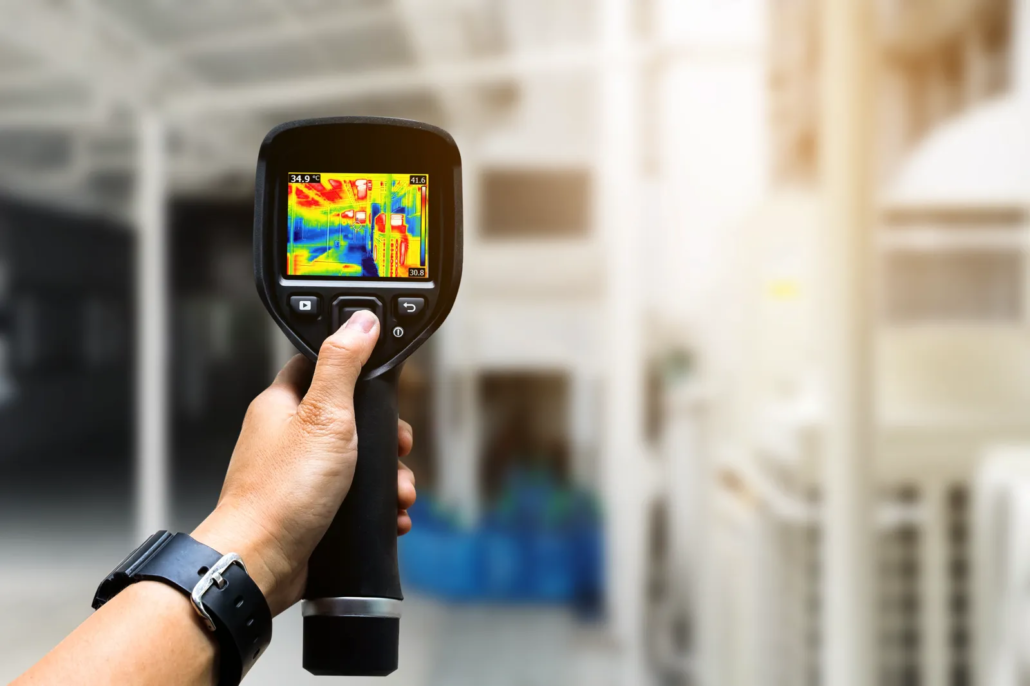
Infrared technology has become a popular tool in commercial roofing inspections. It promises a fast way to locate hidden moisture without tearing into the roof system. For property owners managing large buildings, that sounds ideal. But while the technology is useful, it isn’t perfect. Understanding when an infrared roof scan commercial inspection works, and when it doesn’t, can help you interpret results more accurately.
How Infrared Roof Scans Work
A thermal roof inspection uses infrared cameras to detect temperature differences across the roof surface. Moisture trapped in insulation holds heat longer than dry materials. As the roof cools in the evening, those wet areas appear as warmer spots in the scan.
This method is commonly used for roof moisture detection infrared surveys on large commercial buildings. Instead of opening the roof in multiple places, inspectors can identify potential wet insulation areas quickly.
When conditions are right, the roof infrared scan accuracy can be surprisingly effective. It allows contractors to map moisture areas and focus repairs only where they are needed.
Why Infrared Testing Is Valuable
Infrared scanning is one of several roof condition assessment methods used in commercial property management. It’s especially helpful when evaluating older flat roofs that may have hidden moisture below the membrane.
Many building owners use it as part of a commercial roof moisture survey before making major repair or replacement decisions. By identifying saturated insulation, facility managers can avoid replacing entire sections of roofing that are still dry and functional.
Because it does not require cutting into the roof system, infrared scanning is considered a form of non-destructive roof testing. That makes it attractive for preliminary inspections.
The Limitations of Infrared Technology
Despite its advantages, there are several infrared roof scan limitations that property owners should understand.
First, weather conditions matter. Infrared scans require proper heating and cooling cycles to create measurable temperature differences. If the roof surface never warms enough during the day or if it cools too quickly the results may be unclear.
Second, certain roof assemblies can affect readings. Ballasted systems, reflective membranes, or thick insulation layers may reduce roof infrared scan accuracy.
There are also situations when infrared roof scans fail to detect moisture altogether. If water has already evaporated from insulation or if the moisture content is very low, the thermal difference may not be detectable.
Why Follow-Up Testing Is Important
For this reason, infrared imaging is usually just the first step. Experienced roofing professionals often confirm findings with flat roof moisture testing methods such as core samples, capacitance meters, or electronic leak detection.
Combining technologies produces a more reliable evaluation. While infrared identifies suspicious areas, physical testing verifies whether moisture is actually present.
Final Thoughts
An infrared roof scan commercial inspection can be a powerful diagnostic tool, especially when used as part of a larger commercial roof moisture survey. However, it works best when building owners understand both its strengths and its limitations.
Used properly, thermal roof inspection technology helps roofing professionals make smarter repair decisions and minimize unnecessary replacement. But like any inspection method, it should be combined with other roof condition assessment methods to deliver the most accurate picture of a roof’s condition.


