Why Are Granules Coming Off My Roof Shingles?

You clean the gutters and find what looks like a layer of coarse black sand sitting at the bottom. Then you notice more of it near the downspouts.
Those little pieces are probably shingle granules.
Some shingle granule loss is completely normal, especially with a newer roof. Other times, however, a noticeable increase in granules can be one of the first signs that a roof needs attention.
Why Are There Roof Granules in My Gutters?
Asphalt shingles are covered with mineral granules that help protect the asphalt underneath from sunlight and weather.
Finding some granules in gutters doesn’t automatically mean something is wrong. New shingles can shed loose granules left over from manufacturing and installation.
The bigger question is how much you’re finding and whether the amount is changing.
If a roof that is several years old suddenly begins shedding significantly more granules, it may be worth investigating.
What Causes Shingle Granule Loss?
Age is one possibility.
As aging shingles spend years exposed to sun, rain, snow, hail, and changing temperatures, their surface can gradually wear down.
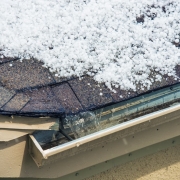
Severe weather can speed up that process. Hail, falling branches, and other impacts may cause asphalt shingle damage that knocks granules loose.
Even foot traffic can affect shingles if someone repeatedly walks across the roof.
Does Granule Loss Mean I Need a New Roof?
Not necessarily.
A few granules in the gutter aren’t enough to diagnose a roofing problem. Look at the bigger picture.
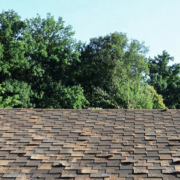
Are shingles starting to look patchy or discolored? Can you see areas where the darker asphalt underneath is becoming exposed? Are shingles cracking, curling, or going missing?
Those additional symptoms may indicate that the roofing material is deteriorating.
A professional roof inspection can help determine whether you’re seeing normal wear, isolated damage that needs roof repair, or widespread deterioration that may eventually require roof replacement.
Can Hail Cause Granule Loss?
It can.
Hail may leave impact marks where granules have been knocked away. Sometimes that damage is obvious. Other times it is difficult to see safely from the ground.
If a strong hailstorm has recently moved through your area and you suddenly notice a large amount of granules in the gutters, scheduling an inspection is reasonable.
Pay Attention to Changes
Your gutters can tell you quite a bit about what’s happening overhead.
A handful of granules isn’t an emergency. A sudden increase in shingle granule loss, combined with visible wear or recent storm damage, deserves a closer look.
Rather than trying to judge the condition of your roof from the amount of grit in your gutter, have an experienced roofer examine the shingles themselves. A roof inspection can tell you whether the roof simply needs to be monitored, whether targeted roof repair makes sense, or whether it’s time to begin planning for roof replacement.