How Long Does a Commercial Roof Replacement Take?
If you’re responsible for a commercial property, the length of a roof replacement matters almost as much as the price.
Roofing work affects parking, deliveries, tenants, employees, rooftop equipment, and sometimes normal business hours. Knowing the likely commercial roof replacement timeline ahead of time makes it much easier to plan around those disruptions.
Unfortunately, there isn’t one standard number of days for every building.
How Long Does It Take to Replace a Commercial Roof?
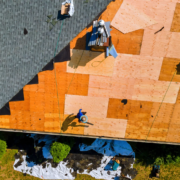
A smaller, straightforward commercial roof replacement may move relatively quickly. A large facility, complicated roof layout, extensive tear-off, or unexpected moisture damage can extend the project considerably.
The timeline depends on factors such as:
- Total roof size
- Existing roofing system
- Amount of tear-off required
- Roof access
- Number of penetrations and rooftop units
- Weather
- Deck or insulation damage
- Material availability
- Crew size
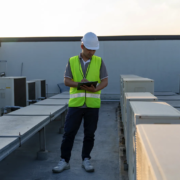
This is why a commercial roofing contractor should inspect the building before giving you a realistic schedule.
What Can Delay a Commercial Roof Replacement?
Weather is one obvious factor, particularly in Wisconsin.
But some of the biggest delays are discovered after work begins.
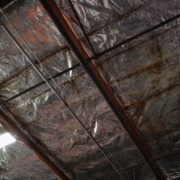
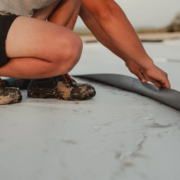
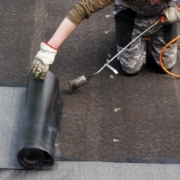
During a flat roof replacement, contractors may find wet insulation, deteriorated decking, or other conditions that weren’t completely visible from the surface.
A thorough roof inspection and moisture evaluation before construction can help identify some of these issues early.
Rooftop equipment creates another consideration. HVAC units, vents, piping, solar equipment, and other penetrations may require additional coordination.
Does the Business Have to Close During Roof Replacement?
Often, no.
Many commercial roofing projects are completed while businesses remain open. That requires planning, however.
Noise, odors, debris, equipment placement, entrances, deliveries, and tenant safety all need to be considered as part of the commercial roofing project.
For buildings with sensitive operations, the contractor may adjust work areas or schedules to reduce disruption.
How Far Ahead Should Property Managers Plan?
Earlier is better, especially if you already know a roof is nearing the end of its service life.
Waiting for a major leak can turn a planned project into an emergency.
Beginning with a roof inspection gives owners and property managers time to understand the condition of the roof, budget for the work, compare options, and select a reasonable project window.
An experienced commercial roofing company should also explain which parts of the schedule are predictable and which may change once the existing system is opened.
Ask About the Schedule Before Signing
Don’t treat the project timeline as an afterthought.
When comparing proposals, ask each commercial roofing contractor how long they expect the job to take, what could cause delays, how weather days are handled, and how the building will remain accessible during construction.
A realistic commercial roof replacement timeline should account for more than how quickly shingles or membrane can be installed. It should consider the building, the people using it, and what happens if unexpected conditions are discovered.
That kind of planning can make a major roofing project considerably easier to manage.