What Is a Commercial Roof Core Sample, and Why Might You Need One?

Sometimes the most useful information about a commercial roof is hidden beneath the surface.
A membrane may look relatively normal from above while moisture, aging insulation, or multiple roofing layers sit underneath it. When a building owner is considering a major repair, coating, recover, or replacement, a commercial roof core sample can help reveal what’s actually there.
It sounds more dramatic than it is.
What Is a Roof Core Sample?
A roof core cut is a small test opening made through the roofing assembly.
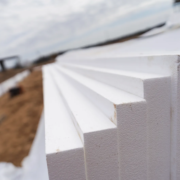
By looking at that sample, a roofing professional can learn more about the roof’s construction, including the types and thicknesses of existing materials and insulation.
After the sample is taken, the opening is repaired and sealed.
A core sample is one tool used during a more detailed commercial roof inspection. It isn’t automatically necessary for every minor repair.
Why Would a Roofer Cut Into a Commercial Roof?
Because the surface doesn’t tell the whole story.
Suppose a property owner is deciding between coating an existing roof and completing a commercial roof replacement. Before making that investment, it’s important to understand what’s below the membrane.
A sample may help identify existing roof layers and verify conditions that can’t be determined simply by walking the roof.
Core cuts can also be used alongside a roof moisture survey to investigate suspected moisture problems.
Can a Core Sample Find Wet Insulation?
A core taken in a specific location can show whether moisture is present there, but it doesn’t tell you the condition of every square foot of a large roof.
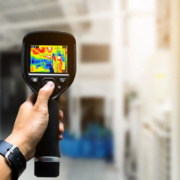
That’s why contractors may use core samples together with infrared scanning or other moisture-detection methods.
If testing indicates wet roof insulation, additional investigation can help determine how widespread the problem is.
That matters because covering trapped moisture with another roofing system doesn’t make the moisture disappear.
Do You Need Core Samples Before Replacing a Flat Roof?
Not in every situation.
The extent of testing depends on the roof, its history, the proposed work, manufacturer requirements, and what the flat roof inspection reveals.
For a property owner, the more useful question is: How does the contractor know what’s underneath the roof they’re recommending we repair, coat, recover, or replace?
A qualified contractor should be able to explain what information was gathered and what assumptions were made.
Better Information Leads to Better Roofing Decisions
Large commercial roofing projects involve significant budgets. Making a decision based only on what can be seen from the surface can leave important questions unanswered.
A commercial roof core sample, combined with a thorough commercial roof inspection and appropriate roof moisture survey, can give building owners a clearer picture of the existing system.
Before approving a large roofing project, ask what testing has been performed and why. The goal isn’t to cut holes in a roof unnecessarily. It’s to gather enough information to recommend the right work the first time.