What Happens When Commercial Roof Insulation Gets Wet?
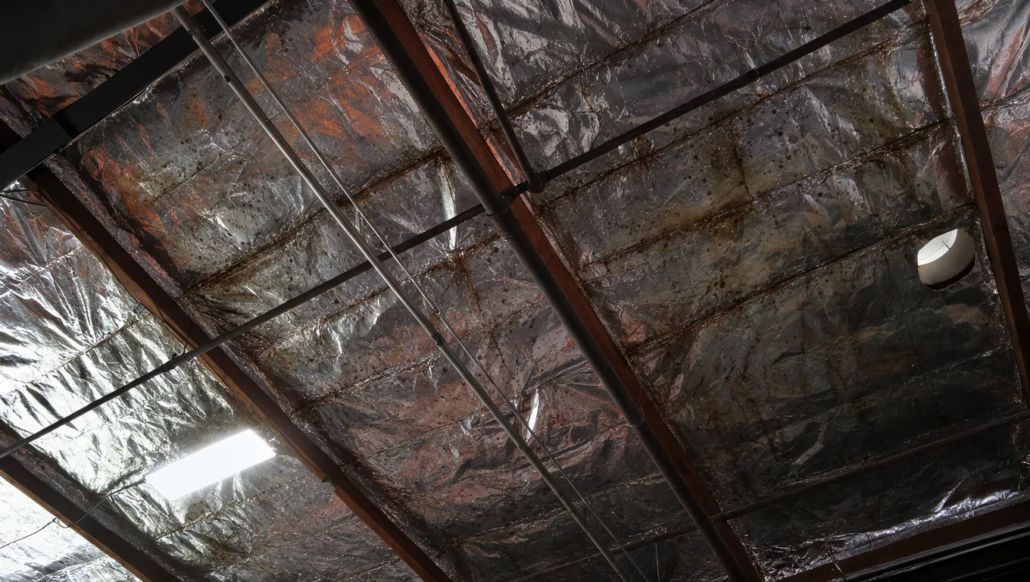
A commercial roof leak can disappear almost as quickly as it appears. Someone moves a bucket, the storm passes, the ceiling dries, and normal business resumes.
Unfortunately, the water inside the roofing system may still be there.
Wet commercial roof insulation is one of the reasons a seemingly small leak deserves attention. Moisture trapped beneath the membrane can affect more than the spot where water entered the building.
How Does Commercial Roof Insulation Get Wet?
Water can enter through punctures, failing seams, damaged flashing, deteriorated penetrations, or other openings in the roofing membrane.
Once inside, commercial roof moisture may spread through or around insulation instead of traveling straight down.
That means the visible commercial roof leak inside the building may not be directly beneath the actual roof failure.
It also means repairing only the obvious membrane opening doesn’t necessarily address moisture already trapped underneath.
Why Is Wet Roof Insulation a Problem?
Roof insulation is intended to help control heat transfer through the building.
When insulation becomes saturated, its performance can suffer. Moisture may also contribute to deterioration of other roofing components and make it harder for roofing materials to perform as intended.
That’s why saturated roof insulation often needs to be identified and removed rather than simply covered over.
How Do You Know If Insulation Under a Flat Roof Is Wet?
You can’t reliably tell from the ceiling stain alone.
Professional roof moisture testing can help identify areas where moisture may be trapped beneath the membrane.
Infrared surveys are one option. Contractors may also use electronic testing, moisture meters, or core samples depending on the roofing system and situation.
Follow-up investigation helps determine what actually needs to be opened and replaced.
Can Wet Roof Insulation Dry Out?
Building owners sometimes hope the moisture will simply evaporate once the leak is patched.
That isn’t something to assume.
Roof assemblies contain layers of materials, and trapped water may have limited ways to escape. The amount of moisture, insulation type, roofing assembly, and weather conditions all affect what happens next.
An experienced commercial roofer should evaluate the affected area before recommending commercial roof repair.
Does Wet Insulation Mean the Entire Roof Has to Be Replaced?
Not always.
If moisture is limited to a small area and the rest of the roofing system remains in good condition, removing the damaged materials and completing targeted commercial roof repair may be possible.
Widespread moisture changes the conversation.
If testing finds extensive wet insulation flat roof areas, recurring failures, or deterioration across the system, a commercial roof replacement may make better financial sense than continuing to patch isolated leaks.
Don’t Judge the Problem by the Size of the Leak
One dripping ceiling tile doesn’t necessarily equal one small roofing problem.
If your building develops a leak, especially one that keeps returning, find out what’s happening inside the roofing assembly. Roof moisture testing can help determine whether you’re dealing with a simple membrane repair or a larger moisture issue.
Finding wet commercial roof insulation early gives property owners more options and better information before the damage becomes more expensive to address.